

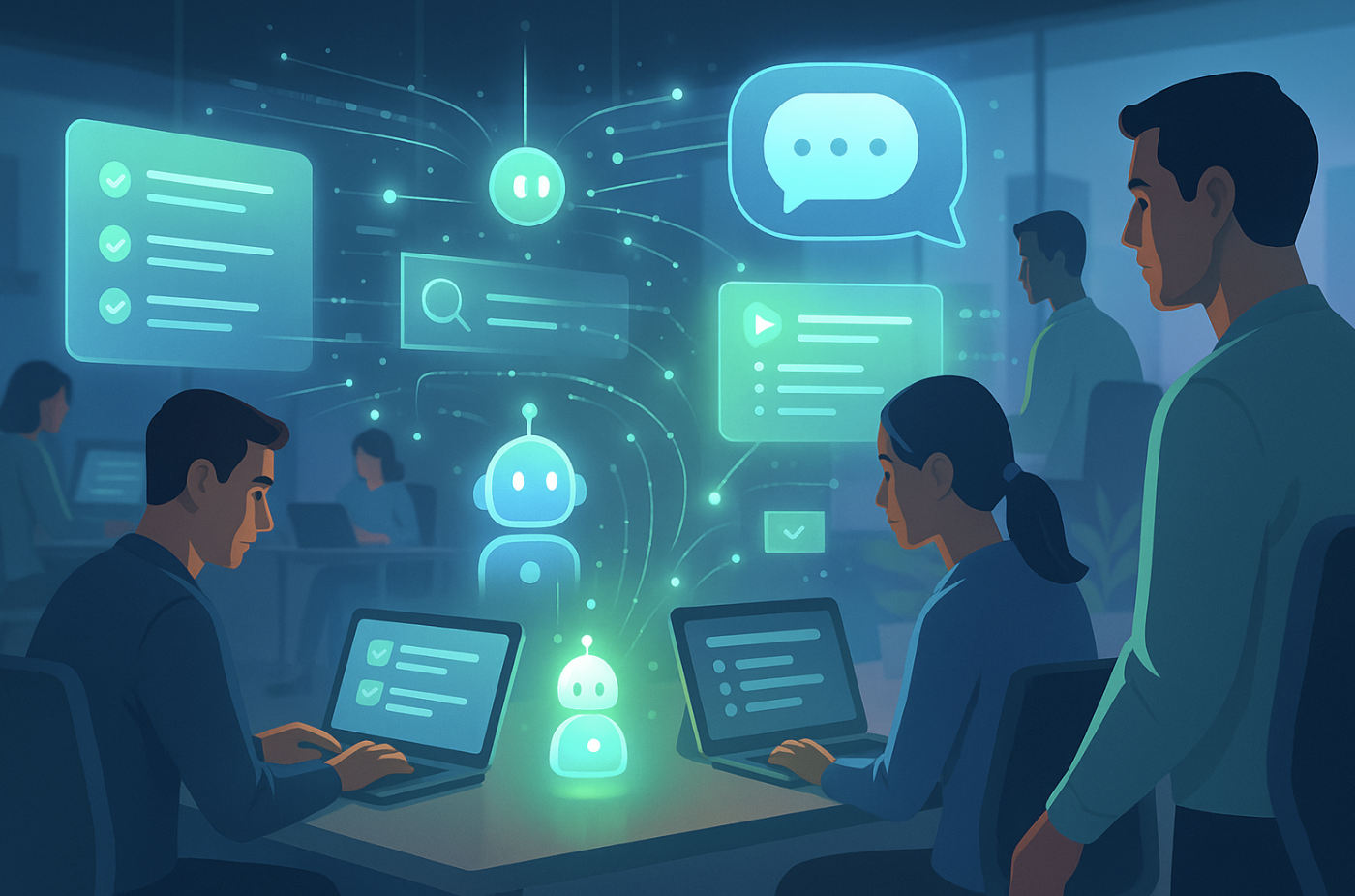
AI-Powered Learning in the Flow of Work: Smarter Support When You Need It Most
Learning in the flow of work is about giving employees the knowledge they need, exactly when they need it. AI is making this vision real by powering just-in-time, intelligent learning solutions.
Why Learning Must Shift Into the Flow of Work
Traditional training is often separated from daily tasks. Employees attend workshops, complete eLearning modules, or sit in classrooms, only to return to their jobs and quickly forget what they learned.
Learning in the flow of work changes that. Instead of pulling employees away from tasks, it embeds support directly into their everyday tools and workflows. AI is the key that makes this seamless, scalable, and relevant.
How AI Enables Learning in the Flow of Work
1. Intelligent Search
Employees no longer need to dig through manuals or portals. With AI-driven search, they can ask questions in plain language, such as:
- "How do I update this record?"
- "What is the process for handling a client complaint?"
2. Personalized Recommendations
AI can suggest content based on role, project context, and past behavior. Instead of irrelevant lists, employees receive only what is most useful to the task at hand.
3. Real-Time Nudges
AI can send timely prompts before important events, during workflows, or when performance data indicates a skill gap. Imagine a sales rep receiving a quick refresher on objection handling right before a client call.
4. Chatbots and Digital Coaches
AI assistants provide on-demand answers, step-by-step instructions, and even coaching tips, all embedded within familiar tools like Slack, Teams, or CRM systems.
5. Performance Support Tools
AI can generate checklists, job aids, or microlearning modules in real time. Support arrives at the exact moment it is needed, reinforcing learning through application.
The Business Benefits
Embedding AI-powered learning into workflows delivers clear advantages:
- Efficiency: Employees spend less time searching for answers
- Retention: Knowledge is applied immediately, improving memory
- Engagement: Learning feels supportive rather than disruptive
- Productivity: Problems are solved faster, tasks completed more smoothly
- Scalability: Personalized support is delivered consistently across large teams
Challenges to Address
As with any shift, leaders must plan carefully:
- Integration: AI tools must connect smoothly to existing systems
- Overload: Too many notifications can distract instead of help
- Accuracy: Recommendations need validation to build trust
- Change management: Employees need guidance to adopt new ways of learning
How L&D Leaders Can Start
- Identify workflows where employees most often need support
- Integrate AI into the platforms employees already use daily
- Begin with focused use cases such as microlearning or quick reference tools
- Train employees on how to use AI-powered search and chatbots effectively
- Track engagement, gather feedback, and refine recommendations over time
Conclusion: Smarter Learning, Seamless Work
AI is shifting learning from something that happens outside of work to something that happens in the flow of work. It creates experiences that are continuous, contextual, and practical.
The real opportunity is not just giving employees more courses. It is about providing the right support at the right moment, so knowledge is applied immediately where it matters most.
The future of workplace learning is not more training. It is smarter support, embedded directly into work itself.
Frequently asked questions
What is learning in the flow of work and how does it differ from traditional training?
Learning in the flow of work embeds knowledge and support directly into employees' daily tasks and workflows, rather than requiring them to stop work for separate training sessions. Unlike traditional training that happens in classrooms or modules away from work, flow-of-work learning provides just-in-time support through the tools employees already use, making knowledge immediately applicable.
How does AI make intelligent search more effective than traditional search functions?
AI-powered search understands natural language queries, context, and user intent, allowing employees to ask questions conversationally rather than using specific keywords. It can interpret ambiguous requests, suggest related information, learn from user behavior to improve results, and provide contextual answers based on the user's role, current project, and historical interactions.
What types of real-time nudges can AI provide to support learning?
AI can deliver contextual prompts such as skill refreshers before important meetings, process reminders when starting specific tasks, best practice tips based on current activities, compliance alerts for regulatory requirements, performance improvement suggestions based on data analysis, and just-in-time microlearning relevant to immediate work needs.
How can organizations integrate AI learning tools with existing workplace systems?
Integration approaches include API connections to existing platforms like CRM, HRIS, and project management tools, embedding AI chatbots in communication platforms like Slack or Teams, creating browser extensions for web-based workflows, integrating with learning management systems, and developing mobile apps that connect to multiple workplace systems seamlessly.
What metrics should L&D teams track to measure the success of flow-of-work learning?
Key metrics include time-to-resolution for employee queries, usage rates of AI learning tools, task completion efficiency improvements, knowledge retention through on-the-job application, employee satisfaction with support accessibility, reduction in help desk tickets, performance improvement in supported workflows, and ROI through productivity gains.
How can organizations prevent information overload when implementing AI-powered workflow learning?
Prevent overload by implementing intelligent filtering based on relevance and urgency, allowing users to customize notification preferences, using progressive disclosure to show information in digestible chunks, timing interventions appropriately rather than constantly, providing user control over AI recommendations, and regularly analyzing engagement data to optimize delivery frequency and content.