
People & competency
Who should be able to do what?
HR and workforce records, role profiles, competency ratings, certifications, training records and assessment evidence.
01The business case for Edplay
The manufacturing capability intelligence loop.
Connect existing workforce and operational systems. Match approved knowledge and competency to skills. Find what is missing, capture the real work, and turn it into verified training.
Explore the capability loop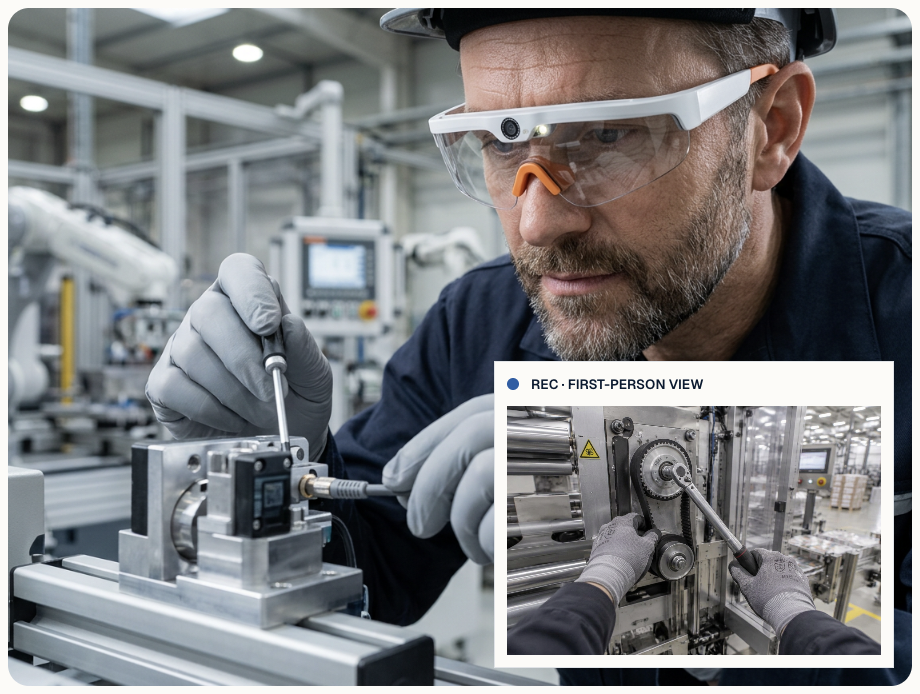
01The opportunity
Manufacturers already hold workforce records, competency evidence, procedures and operational data. The problem is that each source describes only part of the work. Edplay brings them into one reviewed capability picture, showing what each role requires, what each person can demonstrate, what knowledge exists, and what is still missing.
People & competency
HR and workforce records, role profiles, competency ratings, certifications, training records and assessment evidence.
Process knowledge
SOPs, work instructions, quality documents, manuals, existing videos and knowledge contributed by operators.
Operational signals
Production, quality, maintenance, safety and environmental systems, including downtime, scrap and recurring faults.
The Edplay thesis
Edplay is not another disconnected system. It connects knowledge to skills, skills to people, and each intervention to evidence of what changed.
02The capability loop
Six connected stages turn fragmented manufacturing data and real-work knowledge into targeted action. The loop remains understandable without opening any supporting detail.
Connect
Bring existing systems into one source layer.
Match
Map knowledge and competency to skills.
Detect
Separate skill gaps from knowledge gaps.
Capture
Send the right expert to show the real work.
Create
Turn approved evidence into targeted training.
Prove
Update the capability picture with evidence.
Stage 01 · Connect
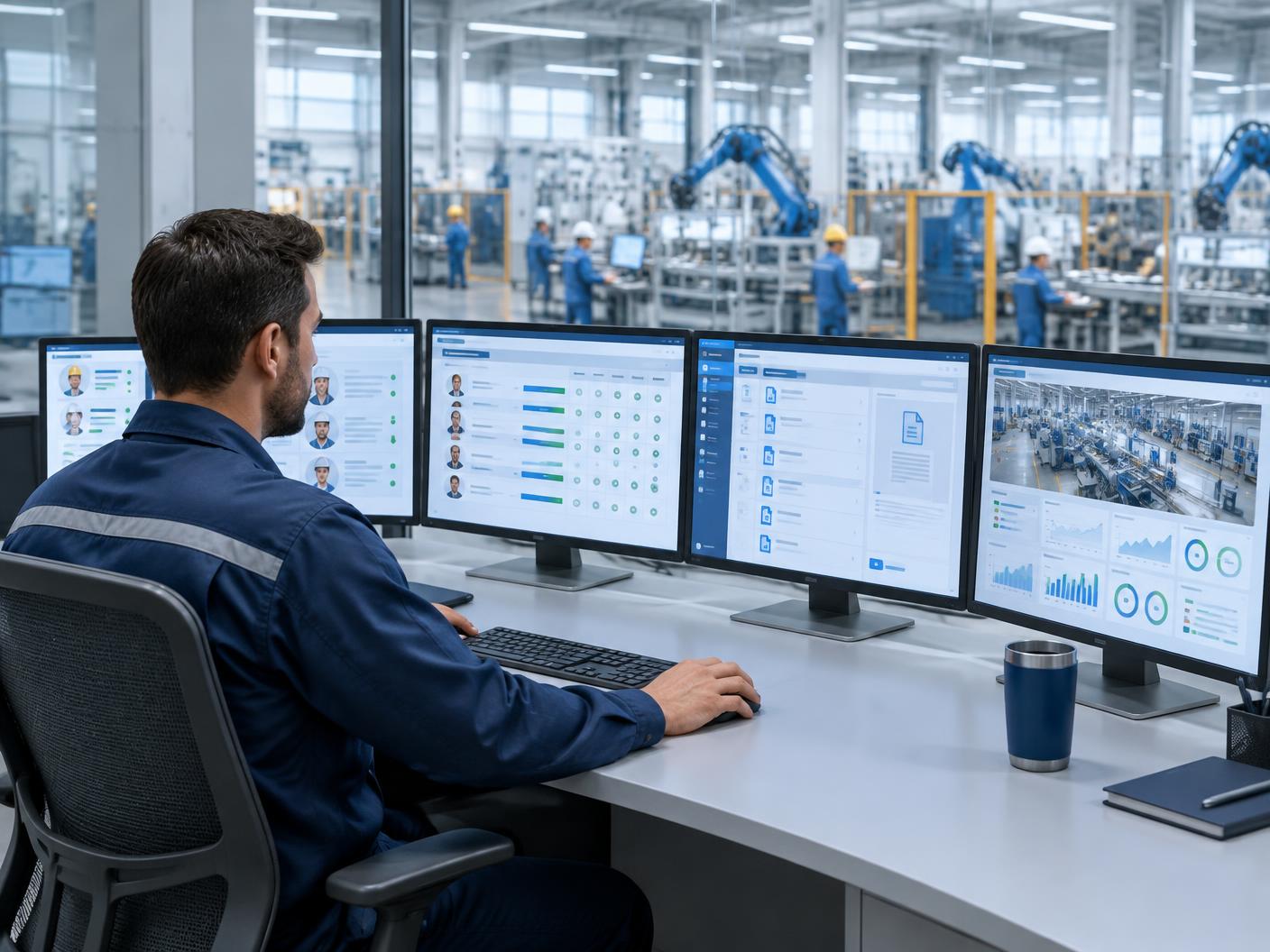
Edplay connects the systems a manufacturer already uses and validates how their fields map before sync begins. It does not require each platform to describe roles, skills or events in the same way.
Output Reconciled workforce, competency, knowledge and operational records.
Workforce
People · roles · shifts · teams
Competency
Skills · ratings · certifications
Document control
SOPs · work instructions · quality
Operations
Production · maintenance · safety
Edplay connected source layer · mapped and validated
Stage 02 · Match
Edplay maps existing competency records and every approved knowledge source to a reviewed skill model. Equivalent names become one canonical skill, while uncertain matches wait for human review. Each person, skill and source remains traceable to its evidence.
Output A knowledge-to-skill-to-person with source coverage and evidence confidence.

Knowledge
Approved evidence
Skill
Line changeover
Person
Operator / role
Stage 03 · Detect
A skill gap means a person or team is below the required standard. A knowledge gap means the required skill lacks enough approved material to teach it. Edplay prioritises both using affected people, criticality and relevant production, quality, maintenance or safety signals.
Decision Train from approved material, or collect the missing work first.

Skill gap · Line A setup
61%
demonstrated capability
Plant standard · 85%
Knowledge gap · Not enough approved evidence to teach this skill
Stage 04 · Capture
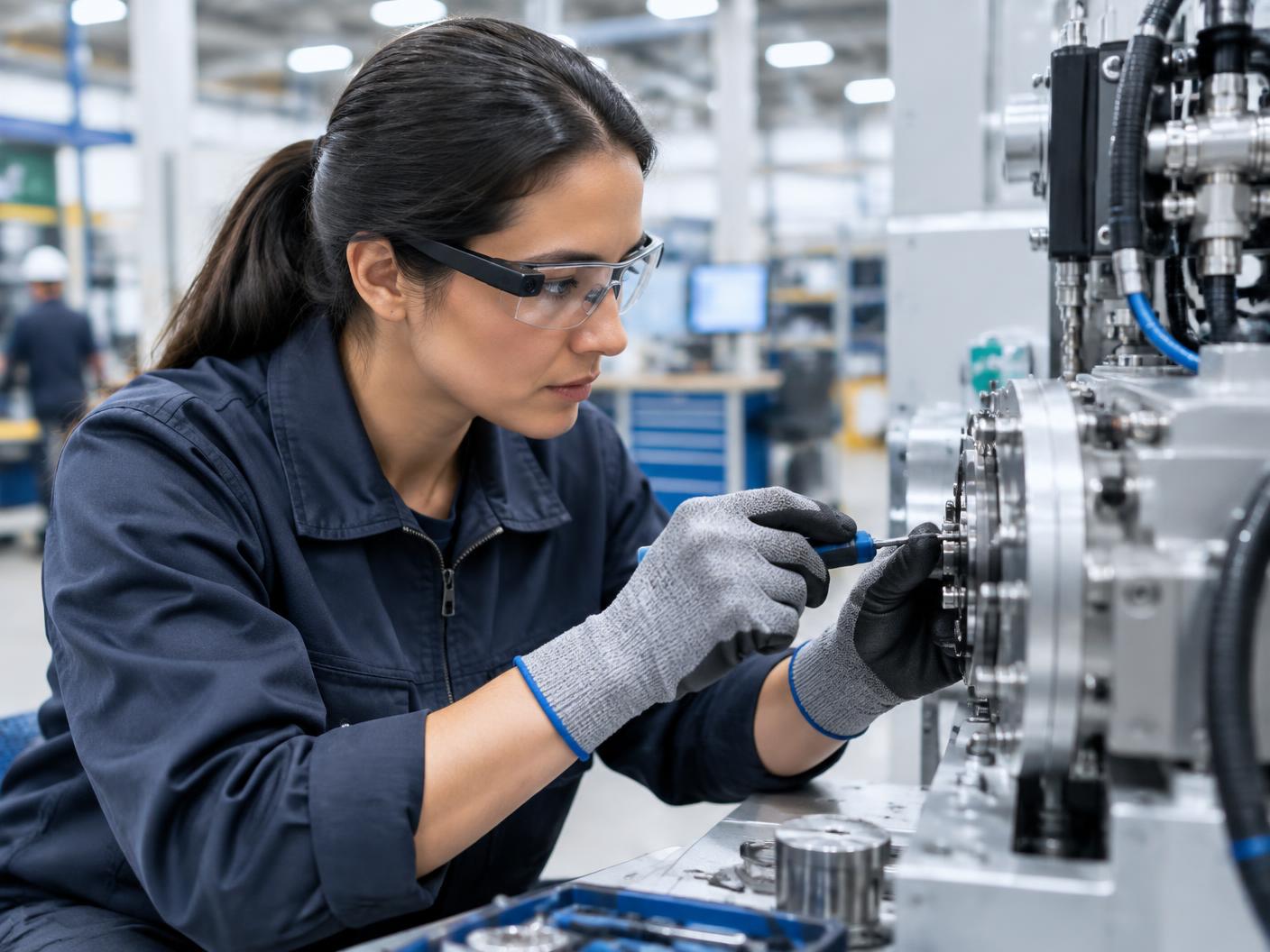
When a priority skill lacks approved material, a leader can request evidence from a named operator or technician. Safety-compatible recording glasses capture first-person video, spoken explanation, tools, conditions and decisions while the task is performed.
Output Review-ready evidence for the exact skill and task that needs to be taught.
Stage 05 · Create
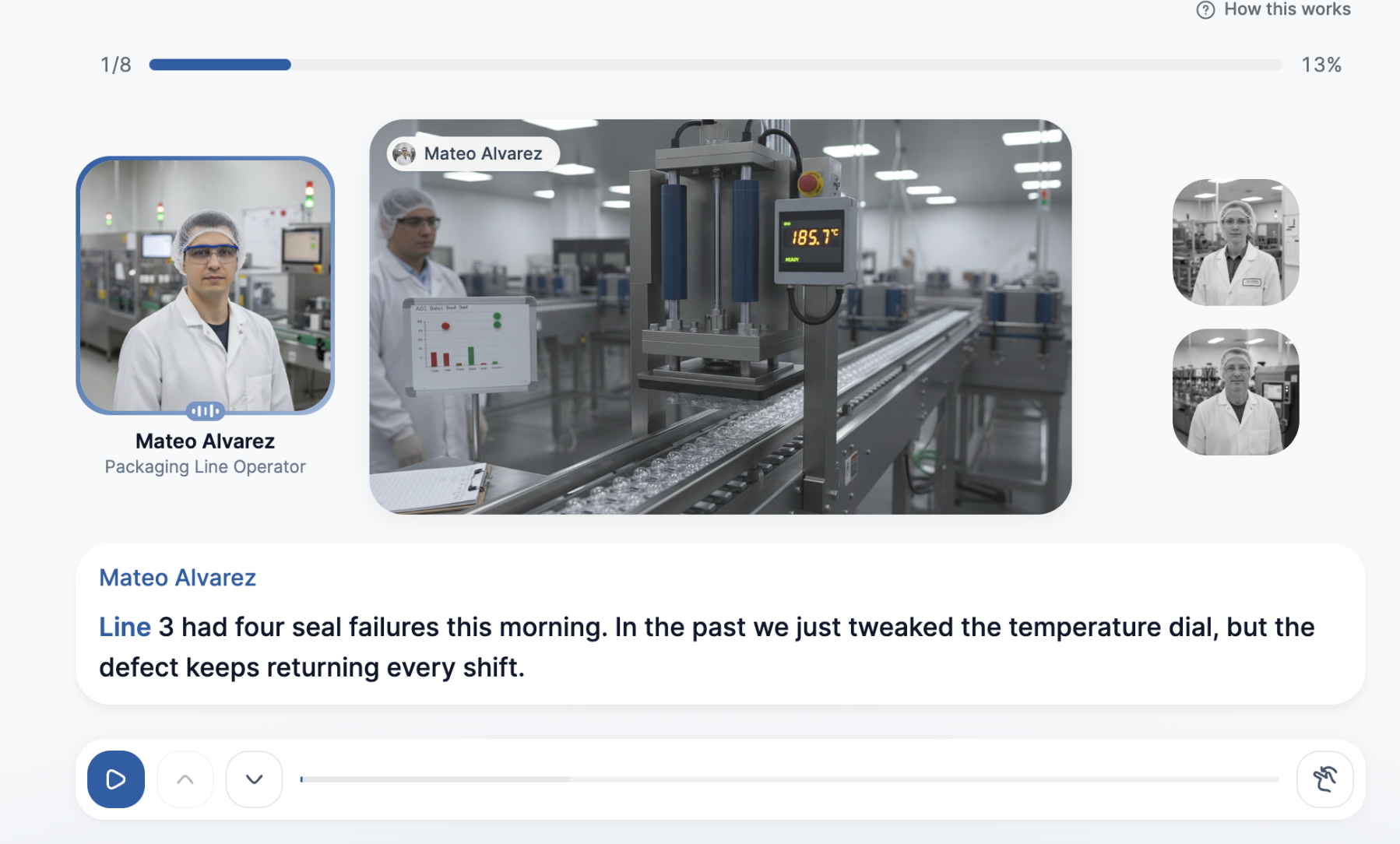
Edplay’s AI content creation uses the approved material matched to the missing skill, whether it came from an SOP, existing video, operator contribution, connected system or recording-glasses session. Verified equipment and tool tags help select footage for the right machine and task. Predefined settings align the output to the company’s brand, tone of voice and manufacturing context. Interactive scenarios, video, audio and assessments can be assembled in minutes for human review.
Output In-the-moment training for the exact skill gap, with a traceable path to every approved source.
Stage 06 · Prove
Assessment results, scenario decisions, practical checks and supervisor sign-off update each person’s skill picture. Operational measures can be compared with the pre-training baseline, while verified competency is written back to connected people systems.
Output A documented before-and-after view of capability, mirrored in the systems teams already use.
The loop closes and gets smarter
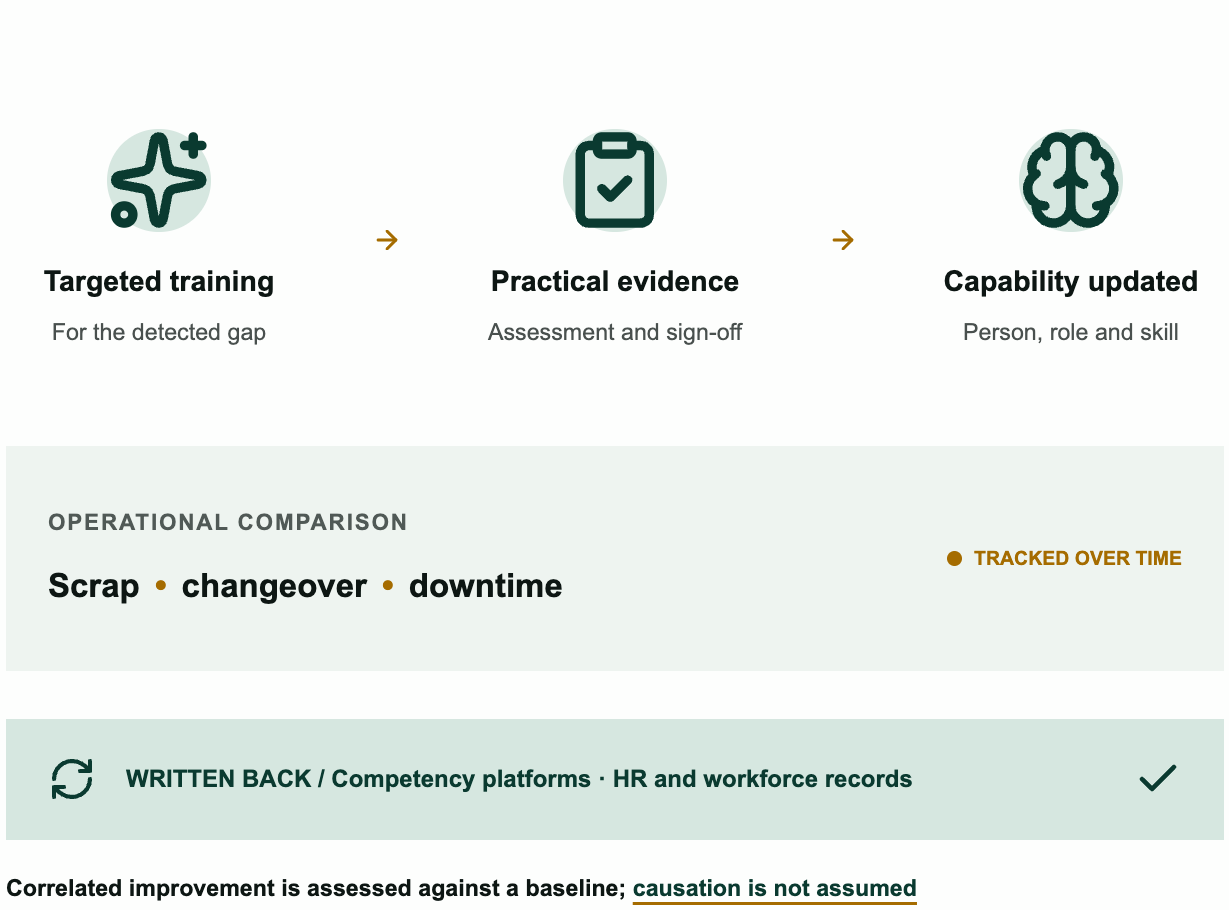
Targeted training
For the detected gap
Practical evidence
Assessment and sign-off
Capability updated
Person, role and skill
Operational comparison
Scrap · changeover · downtime
Tracked over time
Written back Competency platforms · HR and workforce records
Correlated improvement is assessed against a baseline; causation is not assumed
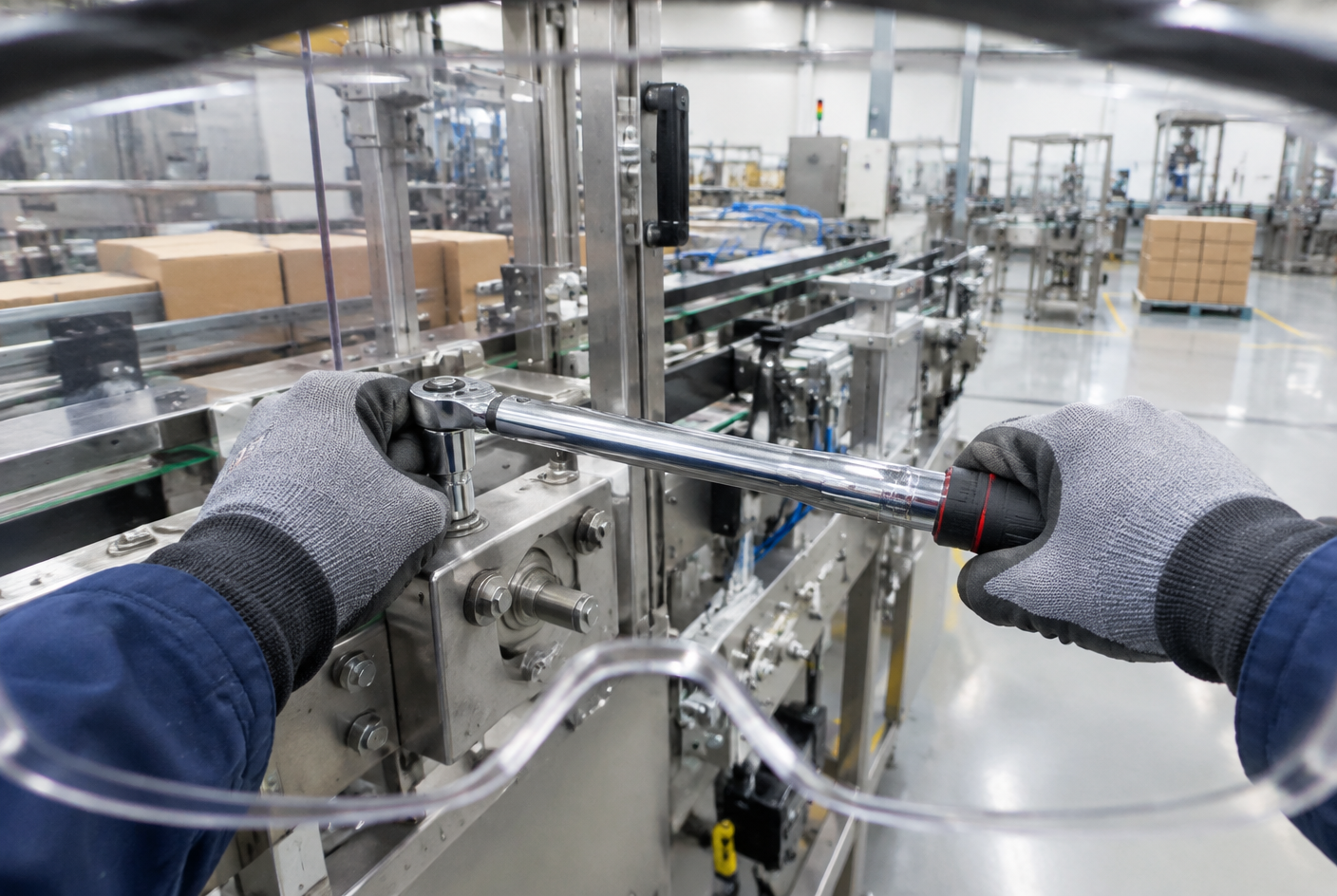
Torque wrench
Packaging · pulley adjustment

Hex key
Assembly · gripper setup
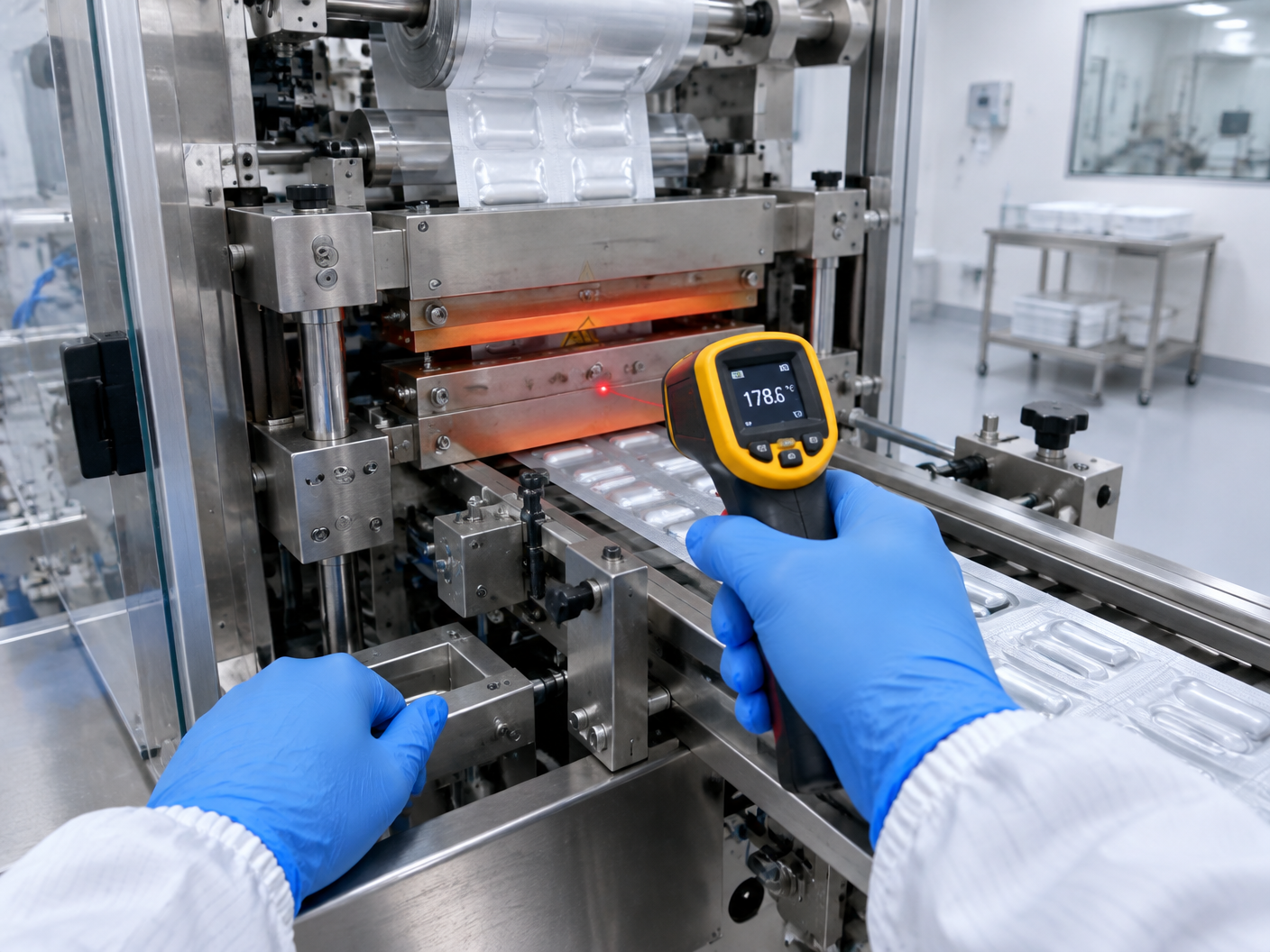
IR thermometer
Pharma · seal-jaw check
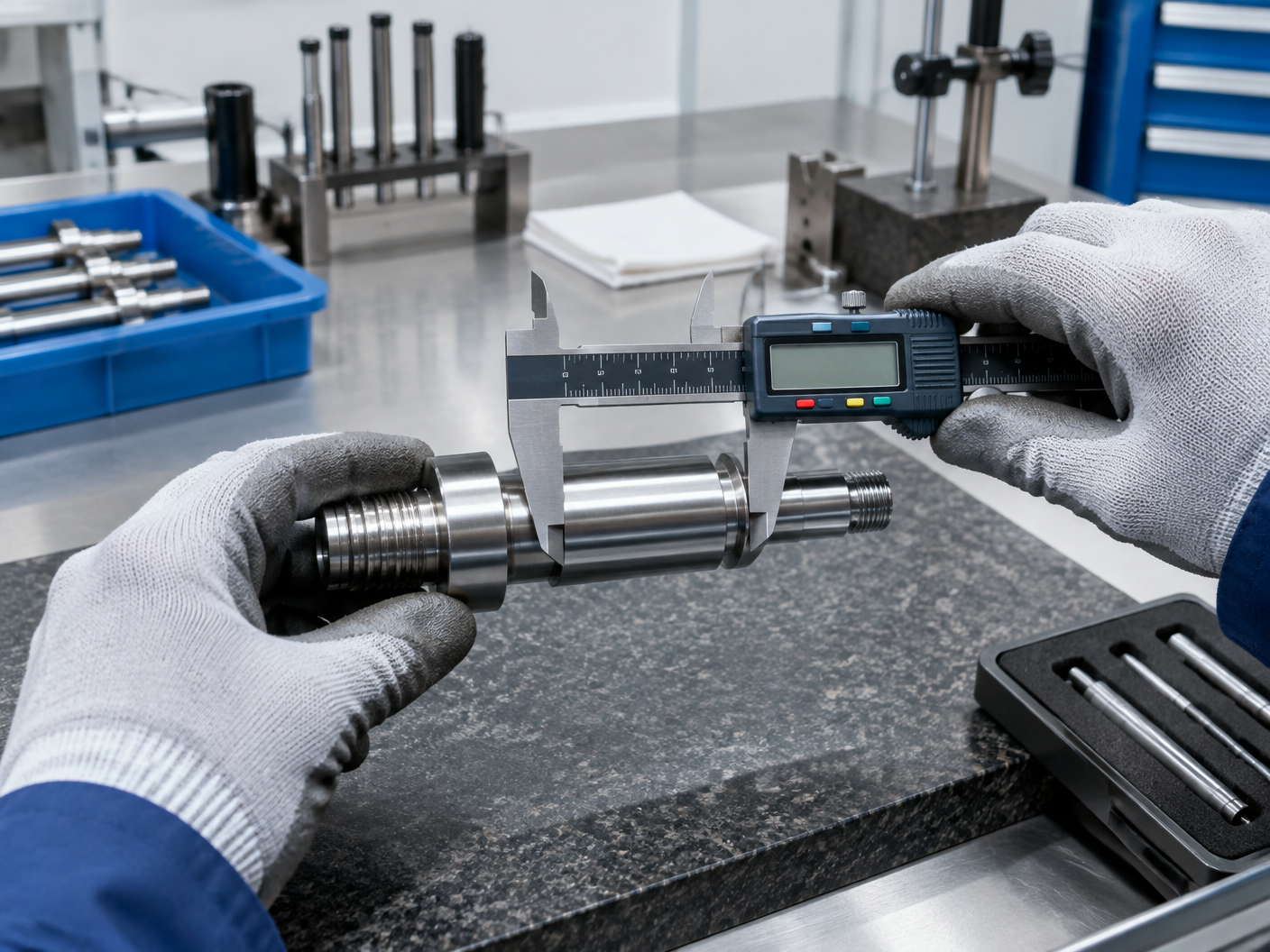
Digital caliper
Machining · shaft inspection
1
A leader selects the missing skill, task and qualified operator.
2
First-person video and audio record the actual steps, decisions and conditions. Every spoken explanation is transcribed automatically.
3
Evidence goes directly to secure cloud or on-premise data storage, based on the customer’s deployment.
4
AI proposes steps, tools and visible machine identifiers, such as model or serial markings, then matches the recording to the right equipment, task and skill.
5
A qualified human confirms the process, safety points, tools and equipment identity before any tags or footage become approved knowledge.
AI prepares, people decide. Accountable leaders approve what becomes company knowledge and what action should follow.
03The output
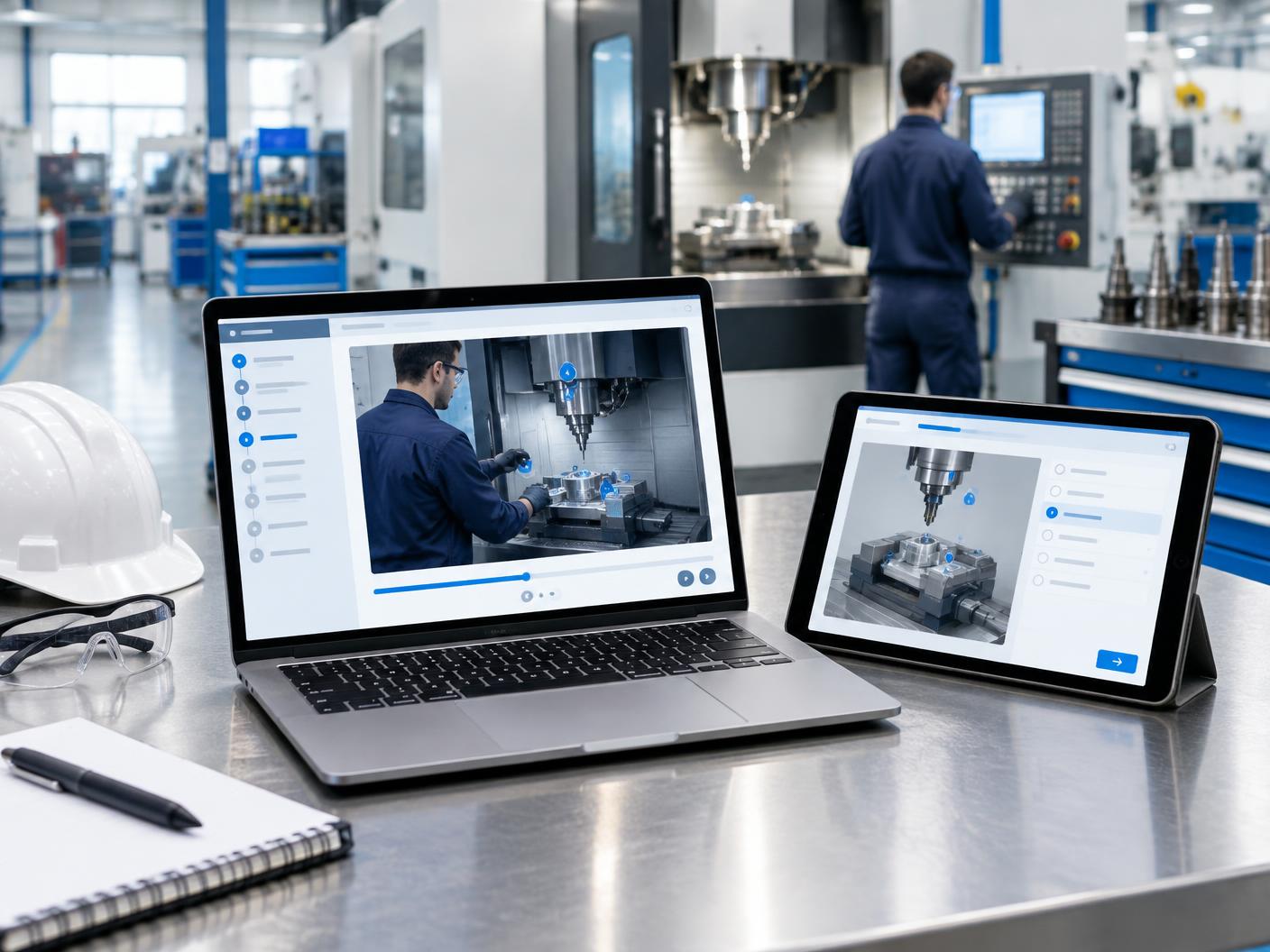
Approved footage and knowledge teach the exact task. Operators see the real machine context, hear the explanation, follow the transcript and complete a focused learning sequence at the point of need.
Real work in the course
Fast, accessible formats
Any voice, any language
Built to be assessed
04Business value
These ranges are illustrative annual opportunities for a mid-sized facility. A pilot replaces assumptions with measured evidence.
Authoring efficiency
$360k–$640k
Potential annual labour savings from faster approved procedure and course creation.
Measure: hours per approved item
Recovered output
$480k–$1.0M
Potential annual value from shorter unassisted fault resolution.
Measure: resolution time and recoverable hours
Less scrap & rework
$300k–$760k
Potential annual raw-material savings from more consistent task execution.
Measure: scrap by line, shift and task
A credible ROI must account for overlap, adoption, line economics, implementation effort and costs. Net benefit = validated savings and recovered contribution − platform and implementation costs.
05A practical first step
Start with two critical lines and a limited group of operators. Agree success measures before launch, then expand only if the results justify it. Pilot counts are proposed targets, not commitments.
Validate available sources, map a shared skill model for two lines, identify skill and missing-knowledge gaps, and record operational baselines.
Invite a proposed 25 operators and technicians to contribute knowledge, targeting 50 micro-contributions. Record selected hands-busy tasks, then route evidence to designated reviewers.
Generate targeted learning from approved evidence, assess capability, compare relevant line measures with baseline, and confirm write-back requirements.
The go / no-go question
Did connected evidence reveal actionable gaps, did missing work become approved training, and did capability improve alongside agreed plant measures?
Next conversation
Bring operations, quality, workforce development and IT together to select pilot lines, confirm source systems, agree deployment requirements and establish the baseline economics.
Book a Demo